
My grandmother lost her house this week due to my great grandmother’s house/Medicare problem and my aunt throwing temper tantrum after temper tantrum for four years. It finally fell apart and now I have the pleasure of moving in my room with my two younger sisters, having my two younger brothers take my room and my grandmother take the extra room. If sever people weren’t enough, let’s just add an eighth. On top of moving things into storage because of the overload of stuff, my 13 year old sister volunteered the family to foster kittens that need to be adopted. So, for two days we had 9 cats at the house… I believe my mother said, “Oh my gosh, I’ve become a red neck.” I think I laughed for an entire three minutes as she sat down to work on her doctorate.
In addition to all that, my brother went to the doctor and we found out that he is losing his hearing. He’s 16.
A few weeks ago I asked the question if any of you were hearing a ringing in your ears and how that could be related to overpopulated fungus in your body. My brother has been hearing a constant ringing in his ear for an entire week.
According to Carl C Pfeiffer, Ph.D, M.D., from the book "Nutrition and Mental Illness", a copper deficiency can also be connected to a ringing in the ears. As I would love to say that that is the only connection this doctor made, that is untrue. There is a plethora of information about how you need vitamins in your body.
It’s debatable as to whether or not vitamin deficiencies can affect mental illness, but if they can help with people who are deathly ill then anything can happen right?
Vitamins like zinc, B12, niacin, folic acid, histamine, high levels of copper, and a high protein diet can help with many different problems that go on in the body. If you take vitamin supplements and eat foods that are high in vitamins and minerals it can help you resist many different things. According to Pfeiffer, if you are experiencing canker sores, difficult orgasm with sex, no headaches or allergies, heavy growth of body hair, excess fat in lower extremities, many dental fillings, ideas of grandeur, undue suspicion of people, the feeling that someone controls your mind, seeing or hearing things abnormally, the ability to stand pain well, and ringing in the ears then you could have any of the above mentioned vitamin deficiencies.
Honestly, if you’ve had one canker sore your entire life, then you are probably ok. I wouldn’t go crazy with the self diagnosis, but in my brother’s case, it could be serious.
My whole family went on the fungus free diet by Doug Kaufman in October and I asked my brother if he heard the ringing in his ears during that five month period, and he admitted that he hadn’t.
I’m hoping that his going back on the diet will help with his possible vitamin deficiencies and then his hearing will improve. I’m really pretty selfish because I don’t want to learn sign language right now, I just don’t have time.
Showing posts with label wellness. Show all posts
Showing posts with label wellness. Show all posts
Sunday, April 4, 2010

Friday, March 19, 2010
Skinnier is Healthier... NOT
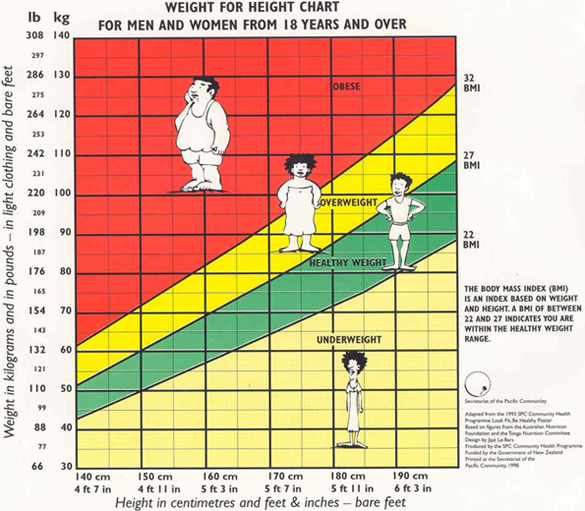
As I was looking for something interesting to write about I came to the realization that not everyone’s fat. I have struggled with weight and mostly insecurity about my curvy body my whole life but many of my friends have been very skinny and had no problem keeping their stick like figure.
When I was younger I held a bit of jealousy towards their ability to eat whatever they want and not gain a pound. Over time I’ve realized that I have hips, and they don’t, and while I have to wear a pants size that is two sizes bigger it doesn’t mean I’m fatter just different. Both body types are beautiful in their own way and it’s difficult for both types to find the perfect pair of pants. Needless to say, there are people in their early twenties who have no problem with weight and are almost too skinny.
I received a comment last week from a blogger and it was on defining the word health. What is healthy may not be for the other. I don’t know how I took that position in my last blog, but I do not believe that. Every person can be healthy eating foods that are healthy and have a good nutritional value. My point is that society doesn’t know the difference. Health is health and it absolutely is not relative, just because a person is skinny does not mean they are healthy. Allow me to prove my point.
Besides the well known eating disorders i.e. anorexia and bulimia which can take away all the nutrition from a person’s body as well as be a mental disorder, there are other diseases that can follow with being, what doctors like to call, underweight or malnutrition. According to Ali Hale, “Underweight or Slightly Overweight: Which is Worse?,” there is a list of reasons why people should worry if their weight is under normal. There’s low muscle mass, hair loss, osteoporosis, anemia, weakened immune system, and for women: menstrual irregularities and pregnancy complications including the inability to get pregnant. That’s a lot of reasons to worry about your weight.
If those aren’t enough of reasons for you then I invite you to answer a few yes or no questions out of Doug Kaufmann’s book “Weight Loss.” This book is about fungus in the body and how it affects the body. Most people gain weight with fungus, but there is a rare few that lose weight from the lack of nutrition. Neither is good.
1. Do you suffer from fatigue?
2. Do you often feel irritable?
3. Do you get more than the occasional headache?
4. Do you have itching, tingling or burning skin?
5. Do you have hives, psoriasis, dandruff, or chronic skin rashes; or do you have acne?
6. Does your vision blur for no apparent reason?
7. Are you bothered by recurring problems with your digestive tract such as bloating, belching, gas, constipation, diarrhea, abdominal pain, indigestion, or reflux?
8. Have you had sharp cravings for corn, peanuts, or sugar?
9. Do you suffer allergic reactions to pollens, molds, animal dust mites, perfumes, chemical, smoke, or fabric store odors?
10. Are you allergic to any foods?
If you honestly answered these questions and said “Yes” to at least one it would mean you have some kind of fungus inside your system that can be gotten rid of with diet. Of course the “more “yes” answers tend to indicate a more serious degree of fungal infection and/or exposure to mycotoxins.” So if you only said “yes” to a few then I wouldn’t freak out.
Taking Hale and Kauffman and many other writers, nutritionists and doctors, as well as the BMI chart at the top, it helps to know where you are and what you need to do to improve. Eat healthily (no junk food) and exercise. Basically follow some of the things I’ve been writing and do your own research.
Honestly, being a newly healthy individual and watching my family go through their ups and downs with weight and health, I’ve realized one important thing. Thank goodness I’m learning how to eat well now so I don’t have to go through being obese and having tons of health problems to change my lifestyle. It’s so much easier for me now then it was for my grandparents, where only some of whom learned how to eat right before diseases took their bodies over.
Sunday, March 14, 2010
Soy-Joy for the Girl and Boy (yeah, I rhymed)

Thank that "being" up there (whoever that might be for you) that we had spring break this week and that I did absolutely nothing except work and watch mind numbing television, for now I am going to blow your mind, again, with some crazy facts and questions that will haunt you.
Neil Barnard, MD, claims that, "women averaging [eating] one cup of soymilk or about one-half cup of tofu daily have about a 30 percent less risk of developing breast cancer." Wow, that's some great stuff, right? He also claims that "many soy products are high in protein" and that manufactures sell this up by putting so much soy in a product that it can give the customer too much protein.
Too much protein? Well, again, according to Barnard,
Overly high protein intake may boost the amount of insulin-like growth factor (IGF-I) in the bloodstream, a phenomenon known to occur with cow's milk.
So, basically, he is saying that eating too much protein (mostly from soy and cow's milk) can heighten the possibility of insulin growth in the body. If you've been reading any of by blogs, then you probably know that I will disagree with this particular argument.
This week I want to take a little trip through society as a whole, because much of what we eat is based on what we learn as a child in our society, so I think it's important. I realize that many people, in the past, have believed that soy (like cow's milk) is healthy and a good source of protein. This especially is targeted toward vegans. Although Americans claim to have an open mind toward many subjects and cultures, we are not without our faults and choose fast food restaurants to nourish ourselves, our young and our old. The fear I have, as I'm sure many nutritionists and smart doctors have, is that it will only get worse in the future. People will become more obese and the planet will become more polluted. (I'm not sure how pollution just worked its way in there, but I'm going to roll with it.)
With this fear in mind there should be someone telling America what really is healthy for you so that maybe things could be different in the future. This brings me back to the facts about soy. It was mentioned earlier, as a popular belief confirmed by Barnard, M.D., that soy is effective in preventing breast cancer in women. But, according to Nexus Magazine, Volume 7, Number 3 (April-May 2000):
Thousands of women are now consuming soy in the belief that it protects them against breast cancer. Yet, in 1996, researchers found that women consuming soy protein isolate had an increased incidence of epithelial hyperplasia, a condition that presages malignancies. A year later, dietary genistein was found to stimulate breast cells to enter the cell cycle - a discovery that led the study authors to conclude that women should not consume soy products to prevent breast cancer.
Since 1996, research has not been reported that breast cancer cannot be prevented by eating soy protein isolate, which is basically a version of soy that is processed and bleached and processed again. In the grand scheme of things it is important to see things in perspective, therefore, let's look at the real protein needs. According to Healing Daily, soy is a source of protein but also contains “phytic acid [which] blocks the body's uptake of essential minerals like magnesium, calcium, iron and especially zinc.” Overall, soy has more protein than a food without protein but also has more phytic acid than any other food with protein; therefore it is less than sufficient as a true source of nutrients.
My main topic was to haunt you with the scary facts about soy and I wonder whether America will actually research the true value of foods or just keep eating “diet” foods that aren’t really healthy. If I were to be an optimist for a moment, I would be able to imagine a world of fit individuals who loved to learn about health and nutrients and worked out to get to a picture of perfect health… but, as it were, I am no optimist. Is it possible for people to become healthier as they learn about health… yes, will the majority of people do it? I think that picture is impossible as most people don’t like to put work into what they eat… hence “fast food.”
Sunday, February 28, 2010
What Should I Believe?
Fancy wording can really mess up human understanding and change human behavior for the... well, not for the better. Let's talk about antioxidants as an example. Most people believe that antioxidants are a healthy thing for the body and yet, contrary to popular knowledge, the European Food Safety Authority (EFSA) has claimed that anti-oxidants do nothing for the body. They stated:
Meaning that there is no evidence to support that antioxidants help psychologically or within cells and molecules. So based on this little amount of knowledge would a normal person try to research more on the subject to find if this information is true? No. Would that same person, however, stop worrying about the level of antioxidants in foods because a report, that was worried about the health of Europe, said it doesn't help? Probably, yes.
On the other hand, Jennifer Warner wrote an article entitled "Antioxidant Riches Found in Unexpected Foods" which talks about the benefits of the small red bean. The small red bean happens to be the highest total antioxidant capacity per serving at 13727 per half cup. Reviewed by Brunilda Nazario, MD, Warner writes:
Stating that antioxidants do exactly opposite of what the EFSA says, i.e. help with stress lines and prevent against cancer. Honestly, it's hard for a person or a reader to know who's right.
So, the over analyst I am forced me to borrow a book called "The O2 Diet," written by Keri Glassman, MS, RD, CDN. Glassman, a nutritionist, talks about how oxygen works in the body and how antioxidants can help.
Imagine this... You are 16 and you play football. It's your senior year and you had 2 finals this week plus it's the last game of the season on Friday night. So naturally you don't study all week long, then on Thursday night you pull an all-nighter, take your exam in 1st period, and the other one in 4th period. You work out for an hour after school just to make sure you’re in excellent shape for the game. Play throughout the game, because you’re the starting quarterback, then go and party with your buddies after you win until 4 in the morning. You go to sleep and wake up at 9AM on Saturday ready to go.
Wow, I'm exhausted just thinking about how sick I would be if I did that now, and I'm only 23.
So, 3 years later, it's your birthday, and you are 21 years old. You're a junior and it's coming up on finals. You've learned your lesson on procrastination, so the Trig final tomorrow evening is no big deal. Your plan? Party like its 1999, go to sleep at 6 in the morning, wake up 2 hours before the test and ace that bad boy. Problem? You're not 18 anymore and physically you're body cannon recuperate as quickly as it could 3 years ago.
Therefore the A you studied for turned out to be a D, which dropped your grade two letters. Ouch.
What happens is, as a body ages, cells start to degenerate and as these cells die they release single oxygen molecules into your body. These single oxygen molecules bounce around the body with no home, therefore destroying things as they travel. Kind of like bumper cars. This can create premature aging, heart disease, cancer, and a poor immune system as well as many other serious diseases and conditions.
To help these homeless oxygen one must ingest antioxidant type foods that absorb the single oxygen molecules, therefore preventing damage to the body.
I guess, the moral of the story, never believe everything you read unless it's backed up by good information that makes sense to you. OH... and eat your small red beans and wild blueberries, if anything they taste so good and they make you have less wrinkles on your face. Always a plus.
On the basis of the data presented, the Panel concludes that a cause and effect relationship has not been established between the consumption of the food(s)/food constituent(s) evaluated in this opinion and (1) a beneficial physiological effect related to antioxidant activity, antioxidant content, or antioxidant properties, and (2) the protection of body cells and molecules such as DNA, proteins and lipids from oxidative damage.
Meaning that there is no evidence to support that antioxidants help psychologically or within cells and molecules. So based on this little amount of knowledge would a normal person try to research more on the subject to find if this information is true? No. Would that same person, however, stop worrying about the level of antioxidants in foods because a report, that was worried about the health of Europe, said it doesn't help? Probably, yes.
On the other hand, Jennifer Warner wrote an article entitled "Antioxidant Riches Found in Unexpected Foods" which talks about the benefits of the small red bean. The small red bean happens to be the highest total antioxidant capacity per serving at 13727 per half cup. Reviewed by Brunilda Nazario, MD, Warner writes:
Antioxidants are believed to help prevent and repair oxidative stress, a process that damages cells within the body and has been linked to the development of cancer, heart disease, [and] Alzheimer’s disease...
Stating that antioxidants do exactly opposite of what the EFSA says, i.e. help with stress lines and prevent against cancer. Honestly, it's hard for a person or a reader to know who's right.
So, the over analyst I am forced me to borrow a book called "The O2 Diet," written by Keri Glassman, MS, RD, CDN. Glassman, a nutritionist, talks about how oxygen works in the body and how antioxidants can help.
Imagine this... You are 16 and you play football. It's your senior year and you had 2 finals this week plus it's the last game of the season on Friday night. So naturally you don't study all week long, then on Thursday night you pull an all-nighter, take your exam in 1st period, and the other one in 4th period. You work out for an hour after school just to make sure you’re in excellent shape for the game. Play throughout the game, because you’re the starting quarterback, then go and party with your buddies after you win until 4 in the morning. You go to sleep and wake up at 9AM on Saturday ready to go.
Wow, I'm exhausted just thinking about how sick I would be if I did that now, and I'm only 23.
So, 3 years later, it's your birthday, and you are 21 years old. You're a junior and it's coming up on finals. You've learned your lesson on procrastination, so the Trig final tomorrow evening is no big deal. Your plan? Party like its 1999, go to sleep at 6 in the morning, wake up 2 hours before the test and ace that bad boy. Problem? You're not 18 anymore and physically you're body cannon recuperate as quickly as it could 3 years ago.
Therefore the A you studied for turned out to be a D, which dropped your grade two letters. Ouch.
What happens is, as a body ages, cells start to degenerate and as these cells die they release single oxygen molecules into your body. These single oxygen molecules bounce around the body with no home, therefore destroying things as they travel. Kind of like bumper cars. This can create premature aging, heart disease, cancer, and a poor immune system as well as many other serious diseases and conditions.
To help these homeless oxygen one must ingest antioxidant type foods that absorb the single oxygen molecules, therefore preventing damage to the body.
I guess, the moral of the story, never believe everything you read unless it's backed up by good information that makes sense to you. OH... and eat your small red beans and wild blueberries, if anything they taste so good and they make you have less wrinkles on your face. Always a plus.
Subscribe to:
Comments (Atom)


